


Yoga after climbing: What’s different?
Stefanie | February 9, 2017
2 Comments
How do you feel after climbing? Hardly able to move or still up for some exercises that could make a big difference? Doing yoga is a great opportunity to give your body what it needs after climbing. But what’s different about yoga after climbing compared to yoga in a class or on your mat at home? In a two-part article series, I'll talk about the differences and how you can create your own post-climbing yoga sequence.
I began doing yoga after climbing when we started ClimbingFlex―back when we were at grad school in Amberg and spent all our free time either on a rock face or at the rock climbing gym.
While Carlos and our friend Chris would climb until the last possible moment, I would usually stop 1-2 routes beforehand and do a few yoga exercises.
It felt great! After opening up my shoulders, stretching my legs, doing a few backbends and side stretches, I felt almost as good as new.
Today, yoga after climbing is a firm part of Carlos’ routine as well:
“I think that it’s an important bridge between climbing and active muscle recovery. Certain yoga exercises have a very good balancing effect so that I don’t feel tension in my back or arms the next day.”

Yoga after climbing: Shorter than usual
A traditional yoga practice, including that at studios, usually lasts between 60 and 90 minutes.
This is a big difference to yoga after climbing. If there’s a yoga class at the rock climbing gym, such a timeframe may be realistic. Otherwise, I don’t think such a lengthy practice is absolutely necessary―including on the mat at home.
The way I see it, results mostly depend on the integrity with which we execute the yoga exercises.

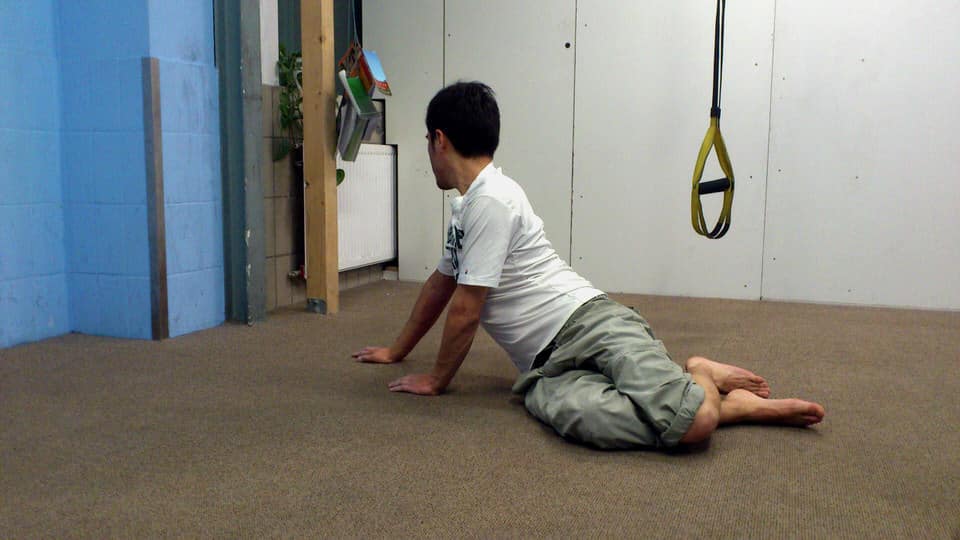
Even practicing yoga for just 20 or 30 minutes can be very beneficial if we make sure to do the exercises consciously, pay attention to our breathing and are fully engaged.
That’s why I think just 10-15 minutes after climbing is enough time to do several exercises that help restore balance.
Of course, the optimum practice length will vary from person to person.
Still: Better to practice for a shorter time and be fully engaged than to not do anything at all.
Mindfulness: What feels good after climbing? What doesn’t?
Everyone’s body is different. That’s why something can feel great for you but be entirely wrong for your climbing buddy.
The key question is:
Which parts of my body need a counterbalance to climbing?
The answer to this question determines the pose you should select.
It’s about listening to your body, giving something a try and then paying attention to how your body responds to the pose.
In general, yoga is about listening to your body and being present in the moment.
But this is even more important after climbing because the body is warmed up and some stretches will come quite easily―sometimes too easily.
In that case, it’s important to set limits: How much more can I give into the stretch, and when would it be better to stop?

But not every yoga pose we can normally do without a problem feels good after climbing.
After climbing, you’ll notice that you’ve exerted some parts of your body more than others. Yoga poses that further target exerted areas would be counterproductive.
For climbers this means:
Be mindful of your wrists, shoulders and back.
After climbing, I always avoid planking and arm balance poses, and I try to leave my arms down when I’m in a standing position to relax my shoulders.
Yoga after climbing – in a nutshell
For me, yoga after climbing means a shorter and even more focused practice than usual.
The key to finding the right poses is to ask what your body needs the most right now. This question is also important to me in my everyday practice.
But after climbing, it plays an even greater role because we’ve spent a lot of energy and exerted our bodies. Some yoga poses work great after climbing, others less so.
It’s important to pay attention to your body and to adapt the poses as needed.
My question to you: What part of your body does climbing affect the most?
Related Posts
2 thoughts on “Yoga after climbing: What’s different?”
Leave a Reply
You must be logged in to post a comment.
Shoulder problem, I have had to limit any downward dog in your yoga programs, it feels a bit of a wimp out to do child pose instead
Hi Phil, I’m sorry to hear that! Have you checked out the article about Shoulder Pain here on the blog?
https://climbingflex.com/shoulder-pain/
As you’re doing already, I recommend skipping Downward Facing Dog, Dolphin Pose and other poses that could stress the shoulders. Be mindful in any plank pose, too.
Don’t worry about doing Child’s Pose instead. I recommend that to my participants in classes, too, whenever they feel they’re holding their breath. It’s definitely smarter to listen to the body and challenge yourself only when you can maintain stability.
I personally include different video classes in my home practice, too. Especially in Vinyasa classes and in the mornings, I often limit or even avoid Downward Facing Dog.